
Teenage Sex and Death at Camp Miasma
- Ben Pivoz

- 1 minute ago
- 3 min read
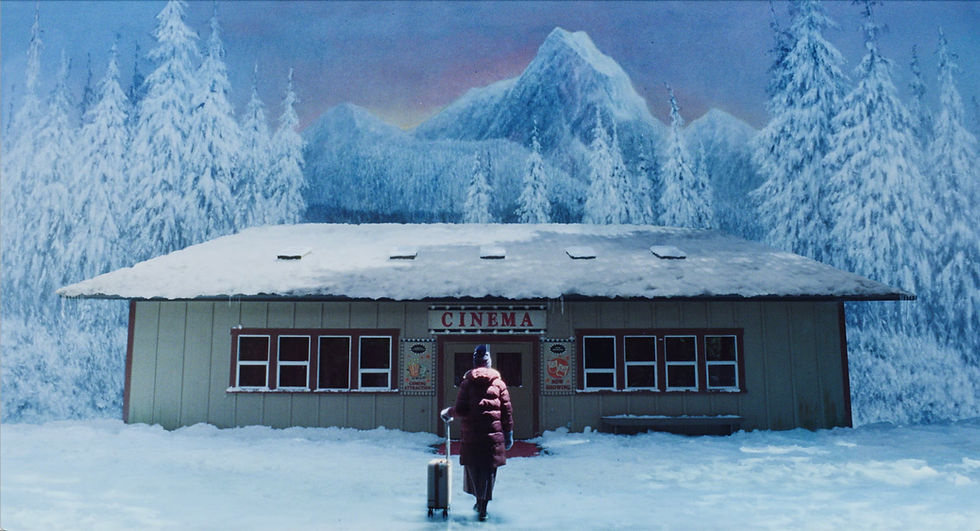
There is something some people find sensual about classic slasher villains. Friday the 13th, Halloween, A Nightmare on Elm Street and their ilk are about oversexed teenagers being hunted and brutally slaughtered by an unstoppable monster. There is a weird intimacy in half-naked women being violated by these almost supernatural beings. Writer/director Jane Schoenbrun, who made 2024’s brilliant psychological horror/drama I Saw the TV Glow, uses that idea to explore queer identity and female pleasure in the difficult to categorize Teenage Sex and Death at Camp Miasma.
Much like in that earlier feature, Schoenbrun blurs reality, making this about how the protagonist understands her own feelings. It is a strange, complicated and engaging experience. Though it has been called a slasher movie itself, it really isn’t. It uses the framework of the genre to tell a story of desire (it also entertainingly satirizes the movie industry). It is a fascinating deconstruction of the genre, picked apart to serve the filmmaker’s themes. Schoenbrun’s films are alive and exciting because they go wherever they want, ignoring formula in favor of meaningful metaphors. This isn’t as tight or focused as TV Glow, yet it is definitely worth checking out.
Kris is an artistic filmmaker chosen to resurrect the once popular Camp Miasma horror franchise. Convinced that the best angle is to bring back the “final girl” from the original, Kris visits the reclusive former actress out in the middle of nowhere. This experience causes Kris to re-evaluate her life and why she fell in love with Camp Miasma in the first place.
Teenage Sex and Death at Camp Miasma (107 minutes, plus a post-credit scene) has a traditional slasher setup, with a meta twist: a woman travels alone to an isolated location to meet with a stranger. Not only is she rebooting a horror franchise, the person she is going to see lives in the abandoned summer camp where the first in the series was filmed! It seems like it would write itself, however, Schoenbrun immediately swings this into a different direction. Kris is infatuated with her host, Billy, based on the latter’s presence in Camp Miasma. What Kris wants to recreate isn’t the movie. There is a look in Billy’s eyes during one scene that has captivated Kris ever since she saw it. She wants to feel that for herself.

That is where the desire comes into play. Kris is obsessed with the image of young Billy and then by the reality of the woman in front of her. Billy is trapped in the shadow of the project that gave her fame and then chased her away. The killer from the story, a spear-carrying child with a vent on their head, known as Little Death, is always present in Billy’s life, in a way that is very real to her. What Little Death represents in the context of the film, I will leave for viewers to discover for themselves.
With Teenage Sex and Death at Camp Miasma, Jane Schoenbrun shows a love of 80s slashers, but doesn’t stop there. They use that to explore the themes the genre exploits for scares, such as sex, passion and gender. The studio has selected Kris, a queer woman, to remake Camp Miasma because they want to reframe the problematic backstory of Little Death and need her to make it “woke.” Kris intends to take advantage of that, perhaps to make something similar to what we are watching.
This is a very entertaining movie, funny, unpredictable and adventurous. It looks at the way media can shape our concept of identity and sexuality in a literal way. Hannah Einbinder, as Kris, and Gillian Anderson, as Billy, are fully committed to Schoenbrun’s vision and deliver great performances. If not everything in this connects to each other, that just adds to the crazy fun. This is a wild bloody and horny ride.
4 out of 5
Cast:
Hannah Einbinder as Kris
Gillian Anderson as Billy
Jack Haven as Little Death
Written/Directed by Jane Schoenbrun


Comments